The Dark Spirits of Alpine Winter: Krampus, Percht & the Myths of the Underworld
The Alpine Soul and its Inhabitants
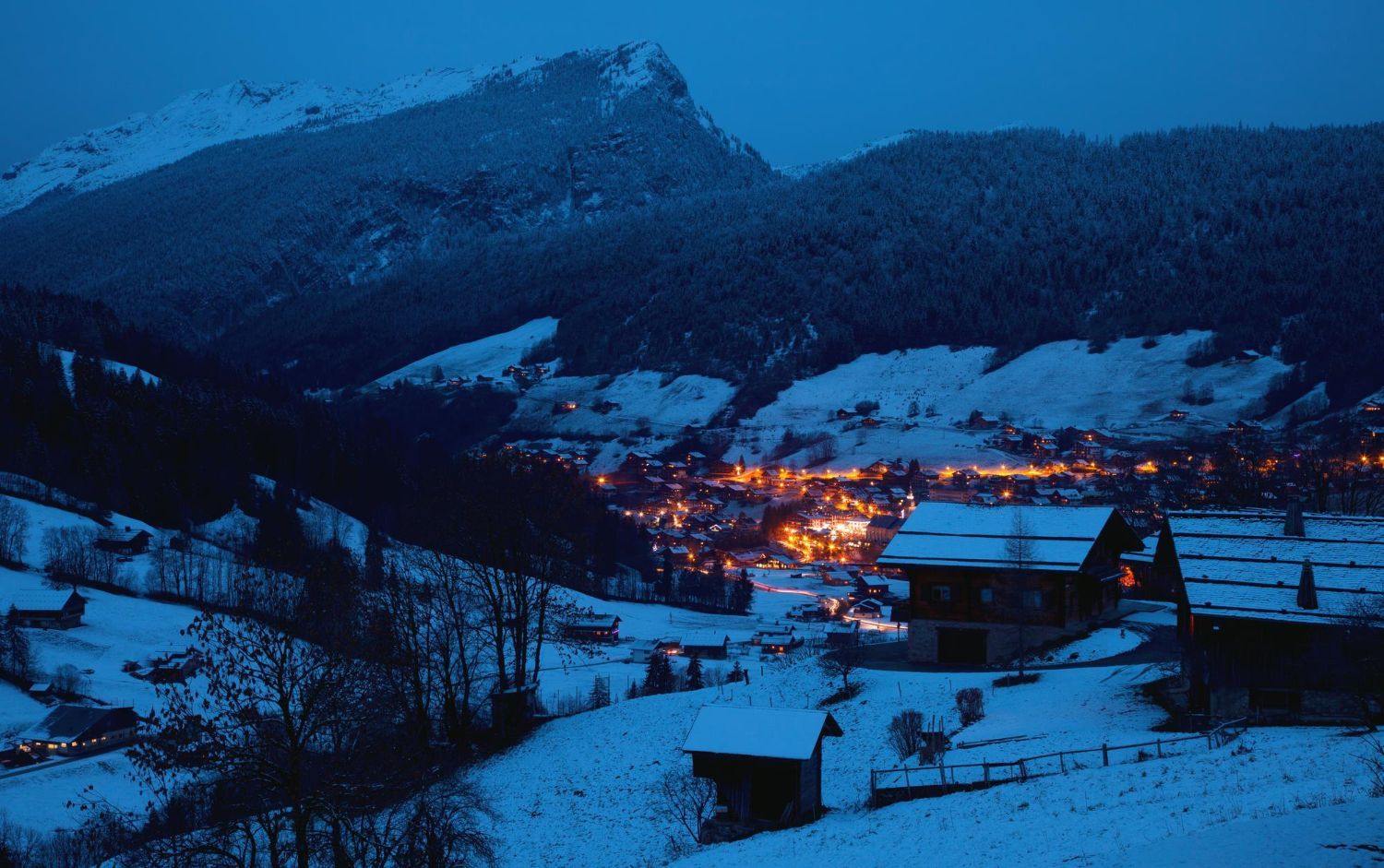
The Alps in early winter: You are not alone
It is early December. You are in a small Tyrolean village, weeks before the Christmas tourist season starts. In fact, the nearby ski resort hasn’t opened yet, most hotels and restaurants are closed during this time of the year. The locals have the village for themselves.
But not so. They are not alone when dark falls. And the dark during these weeks is real darkness. Pitch black. You only see a few windows lit. The orange lights cast a warm light around the windows, but still, most of the village is dark. The air is ice cold, below freezing points is the norm for the nights during this season. With the cold and the calmness you notice that stars above you, and the stars with the moon expose the contours of the wintery landscape.
You can see surprisingly well even without artificial light, because the moonlight is reflected in the snow. You can see the silhouettes of the surrounding mountains.
But suddenly your hear steps. Not light steps, and not of an individual person. But of a group, and the steps are heavy, stomping, and worse, the noise of the group is not that of humans, but a deep growling sound, and with the growl you seem to note the tingling of cow bells.
But these are not cows.
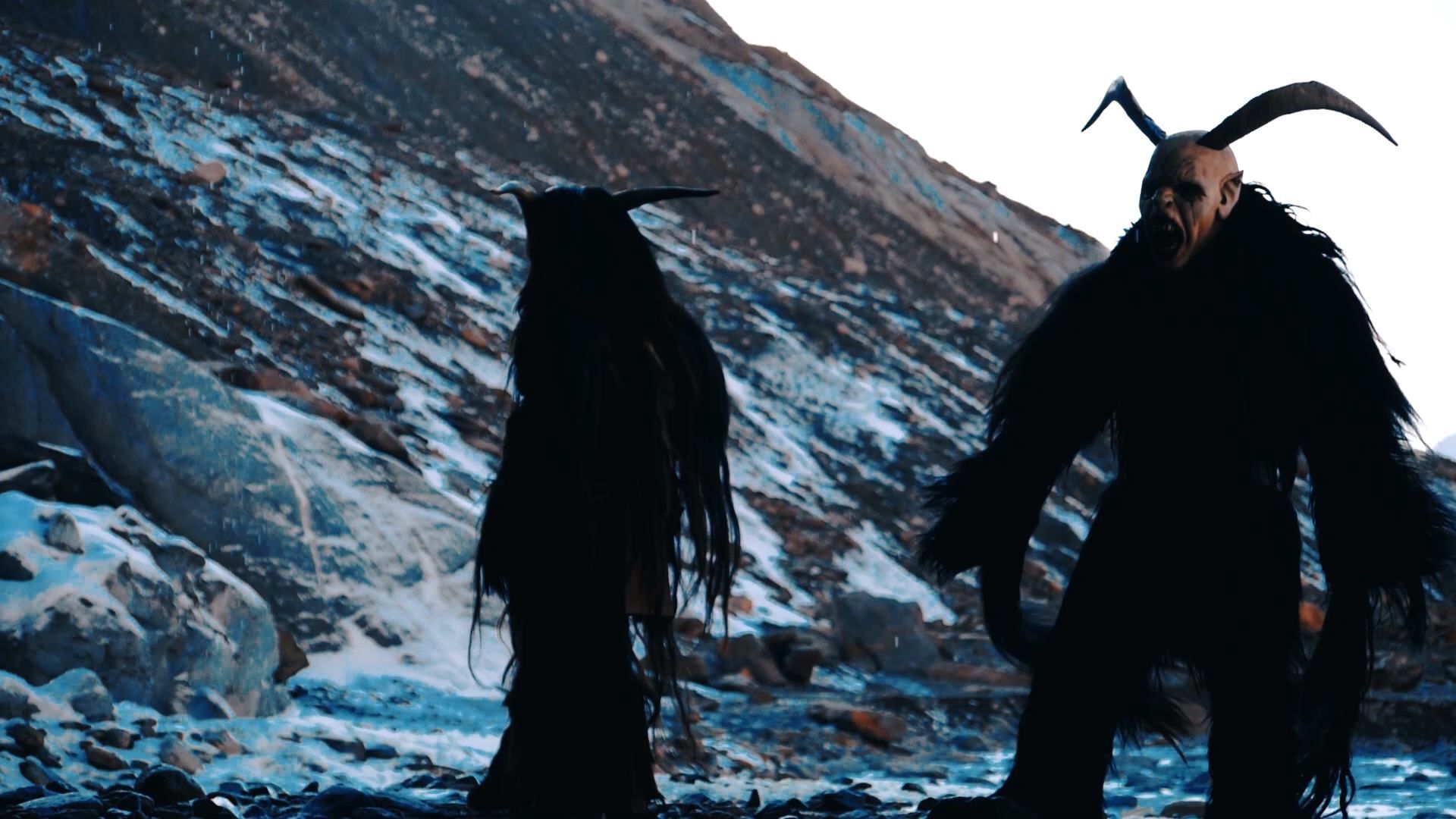
No animals. No humans either. As the group comes closer, you see these beasts go on two legs. They carry long horns, and long thick fur. Now they spotted you! The group got silenced for a second or so when they realized there is a human nearby. But only for a second, because then all hell brakes loose, the horde runs at you, growling you see the grim faces which look more frightening and grim than anything you have see in your life before, you are encircled by this terrifying group.
Why Krampus & Percht are real
Nonsense you claim? I am just a terribly bad writer of creepy blogs you say? Well, you are wrong. Maybe you are right in that I might be a terrible writer, but the subject of the intro is not a cheap B-level phantasy. You can actually encounter these creatures in the Alps, between end of November and well into the first ten days or so of December. What you have seen in this little Tyrolean village is a group of Krampus and Percht.
In my previous blog I outlined that a number of pre-Christian traditions have survived in remote alpine valleys, simply because the eyes of the authorities couldn’t control whats going on behind all these summits. So villagers kept some of their traditions, while other were mixed with the new Christian faith.
The group of Kampus and Percht belong to the former – there is nothing in Christianity that would match with such creatures which can only have been emerged right away from hell. Or is it not? Look again? This must be one of the most terrifying sights possible
Good and evil
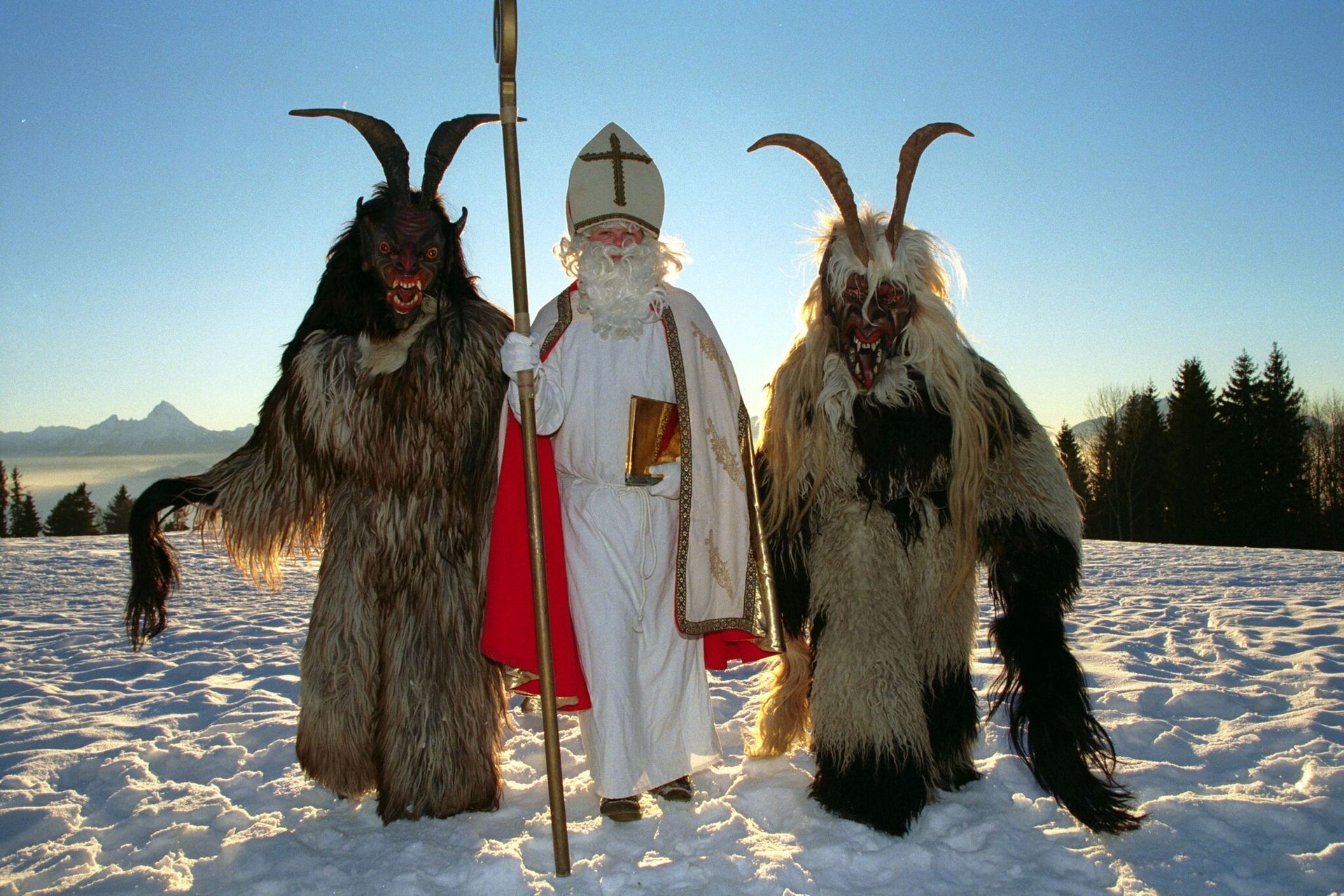
But wait – who is that old man at the edge of the group? An old, apparently honourable gentleman, wearing a long, white beard. White gloves, a stick, a bishop’s mitra..well, no doubt, this must be St. Nikolaus. But what does this holy man, famous for caring for the poor have to do with these creatures of hell?
As with many things in the Alps, the answer is not so straight forward. Centuries of different influences mix. Celtic and Germanic traditions. Local rites. Christian customs. Sacred figures of old religions being transformed into Christian saints. And there are as many layers in between as there are valleys in the Alps.
Believe it or not, and if you are into modern educational methods for children, stop reading immediately, but…in many homes in Austria, Southern Bavaria and South Tyrol, St. Nikolaus enters the home of peaceful families and their kids with at least one Krampus on his side.
Ok, this could fill a PhD thesis in anthropology. But rest assured that one of the mainstream explanations of ghostly creatures (they are here to fend of the ghosts of winter) is wrong. Ghosts normally don’t fight ghosts.
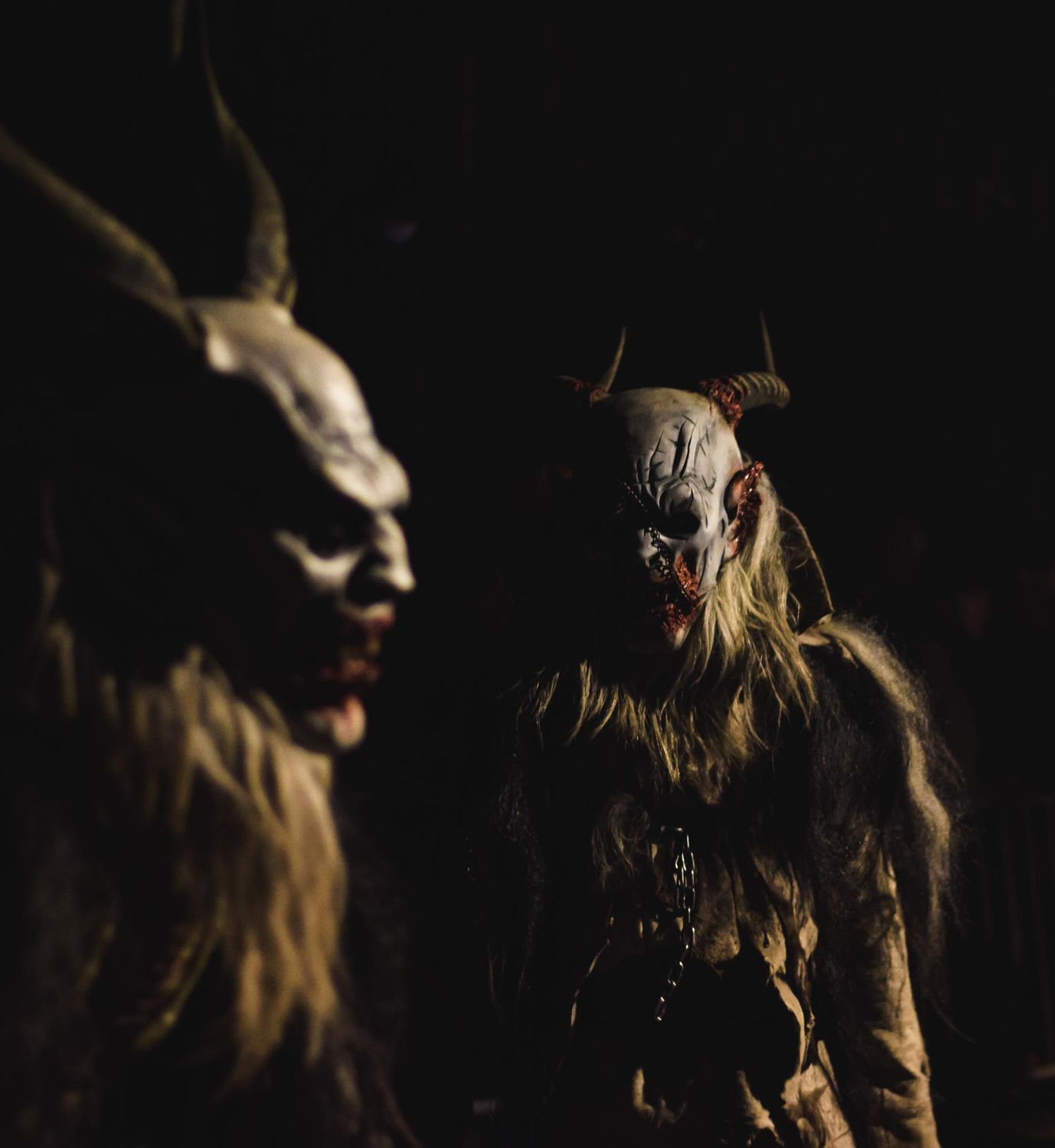
A ‘Percht’ (or Berta, in Trentino La Berta) reads and analyses fate during the long winter nights, and has traditionally be seen as an ally to humans and human souls. And Miss Percht has also traditionally been giving present to children. One form of transformation of Percht is that ‘she’ is now often embodied as an angel-girl which is accompanying St. Nikolaus in many of the holy man’s public appearances. But Miss Percht also had a favourite domesticated animal, a type of goat. This is one of the origins of the horned, furry beings that you have seen in the night at the brink of the village.
Krampus on the other hand has been described as a ‘Wild Man’ or ‘old Man’. The ‘Old Man’ was a ghost who, during the long nights between Christmas and Epiphany, scavenged over the barren, frozen and snow-covered fields – a cornfield ghost. In Bavaria, Krampus is closely related to ‘krampn’, meaning old, dried, also giving reference to a straw-like figure, again closely linked to the cornfield-ghost of the mid-winter.
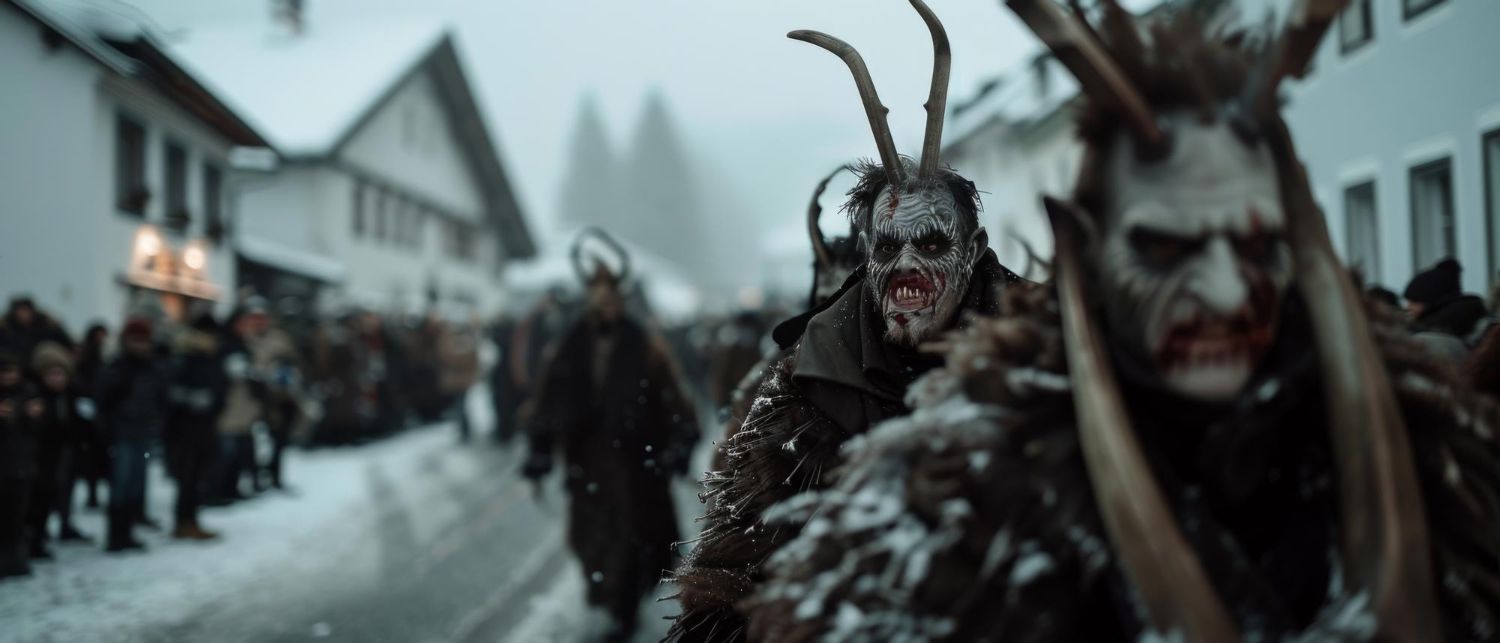
As you can see, it is not easy to draw a clear line from origin to the present. But for me, the groups of Krampus and Percht belong to the most fascinating emblements of the Alpine soul. Rough, untamed, mystic, but also, and this becomes clear when looking at the hellish appearance and their benevolent mythical origin, multi-layered – more than what can be seen at first glance.
While Krampus processions enjoy growing interest year by year, and more and more Krampus-Clubs are being founded (which actually is great), there is also a tendency of ‘Disneyfication’, of too much Bengal lights, too much noise, too big of an emphasis of being scary, while the mythical and multi-layered past gets neglected.
However, in the smaller, more remote villages, the old spirit of the Percht-St-Nikolaus-Krampus groups is still more mythical, fascinating and deeply energetic. I recommend every friend of the Alps to visit such a ceremony at least once. In the Alps in early winter, not only do season flow from one into another, but also mythical ages, traditions, and centuries of human culture and mythological and spiritual thought. In the middle of Europe. How fascinating is that?